Learn the Dry Skin Index
See when indoor air is more likely to dry your skin
The Dry Skin Index, or DSI, is a 0-10 environmental scale that describes indoor drying stress on skin. It combines temperature and relative humidity through the chemical potential of water vapor, the key physical signal behind moisture movement.
DSI Example
Special CareA DSI reading is not a diagnosis or medical recommendation. It is an environmental measurement that can help people who are prone to dry skin plan ordinary moisturizing and humidity-aware routines.
Visual Guide
How indoor air, skin, and moisture control fit together
These graphics explain the core DSI story: the skin barrier, the house as a moisture-buffering system, and the everyday tools that can compensate for indoor drying stresses on skin.
Infographic 1
Water moves from skin toward drier indoor air
Main takeaway: when indoor air is dry, water moves outward from deeper hydrated skin through the stratum corneum and into the room air.
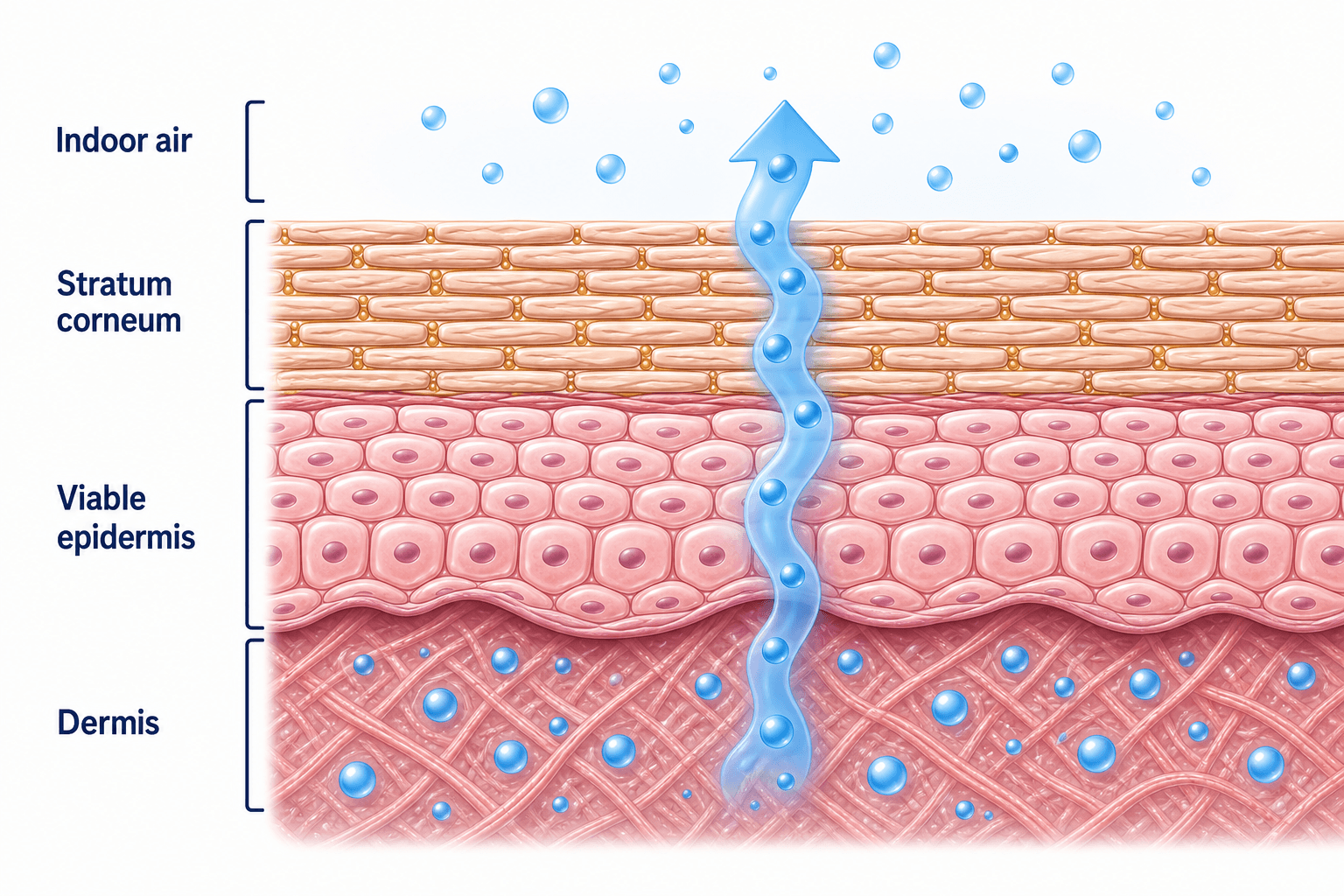 Not to scale
Infographic 2
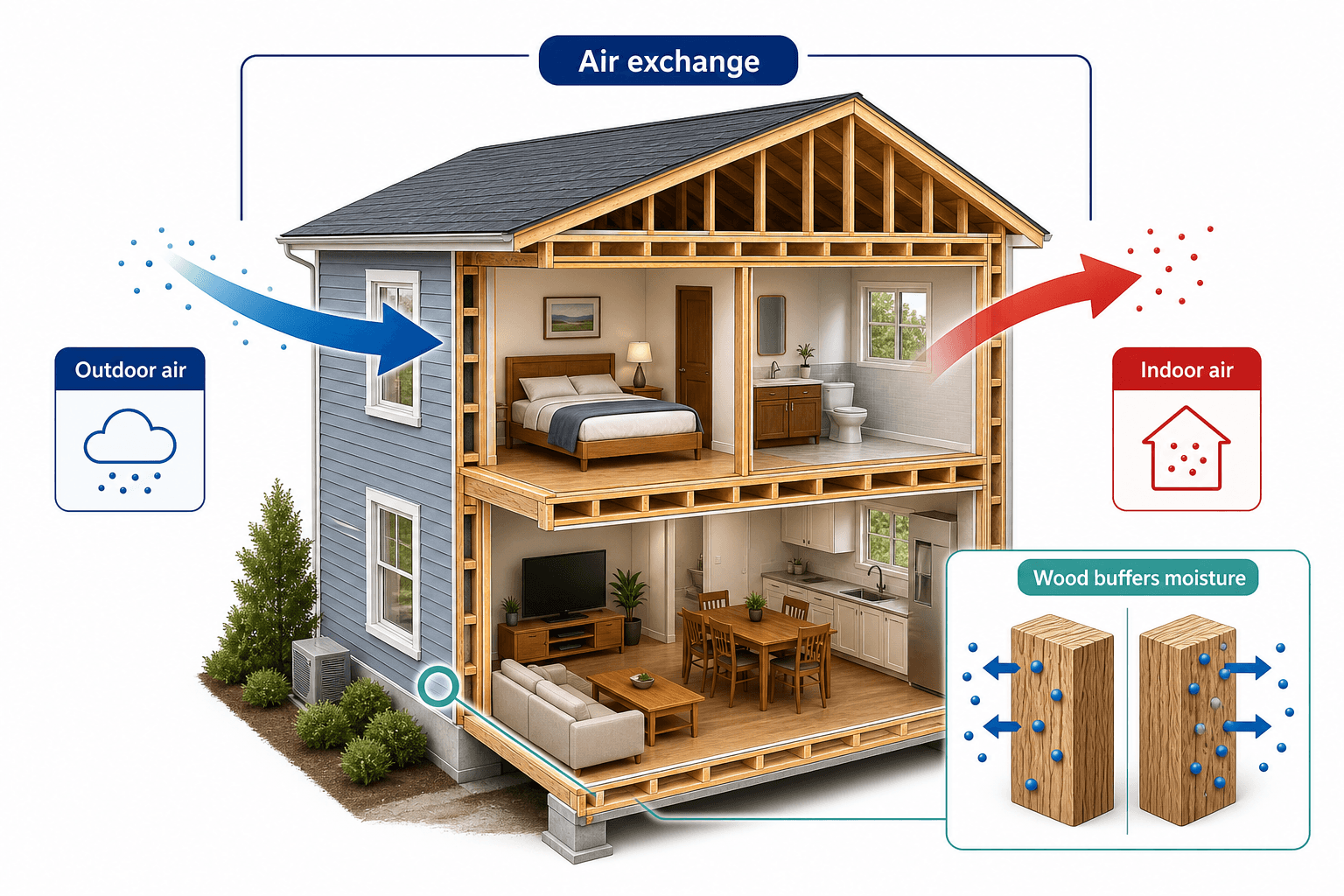
Buildings exchange and buffer water vapor
Main takeaway: air exchange moves water vapor in and out, while wood and other materials can buffer humidity swings inside the home.
Infographic 3
Dry skin web searches rise when seasonal indoor stress rises
Main takeaway: people search for dry skin most during heating season, when skin responds to changes in environmentally-driven stresses as measured by the DSI.
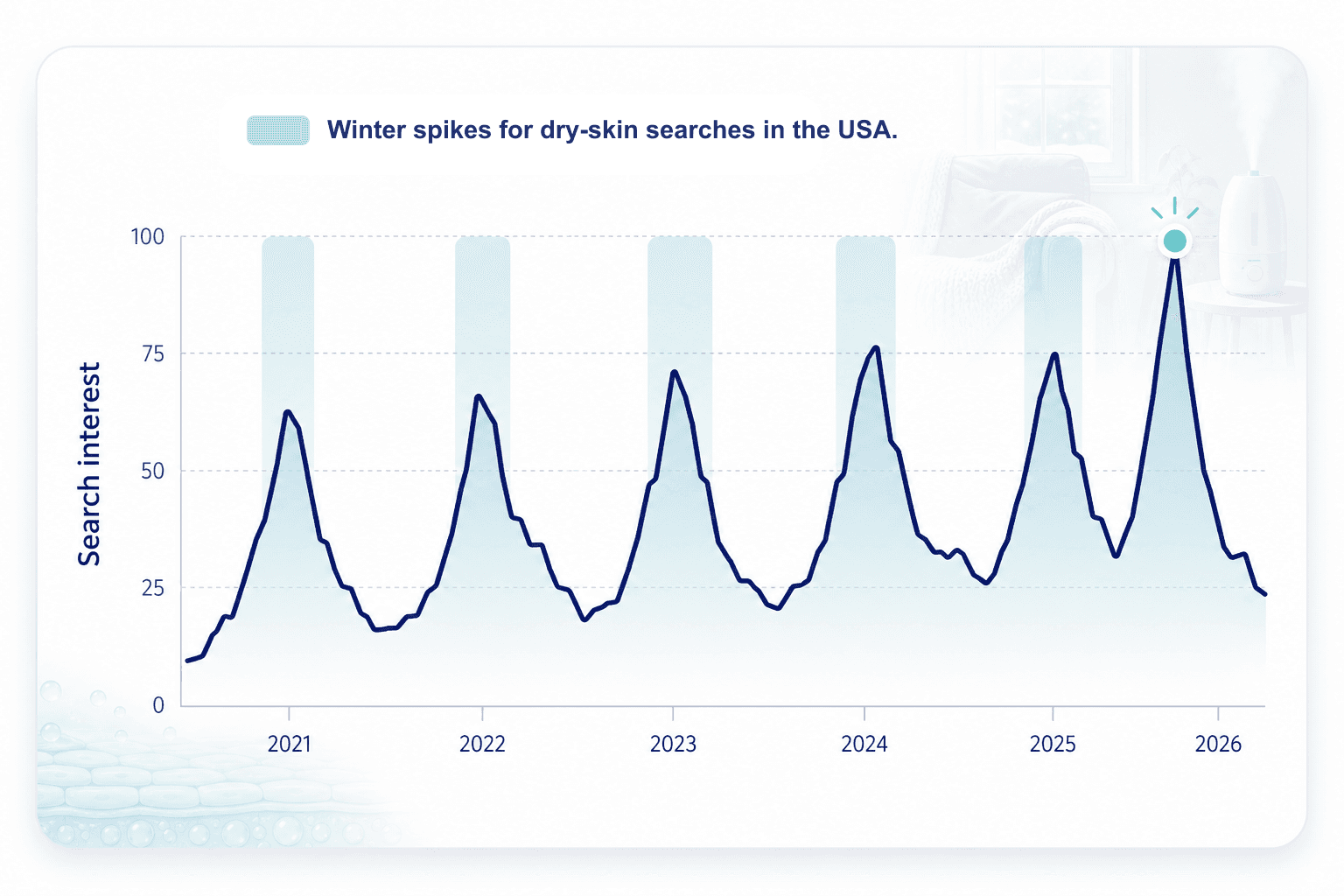 Source: Google Trends
Infographic 4
Skin hydration depends on care and room humidity
Main takeaway: drying stress can affect people across ages, so care often means keeping hands, arms, legs, and face hydrated while also managing room humidity.

Weekly DSI Guide
Ready to turn the DSI story into a weekly signal?
The visual guide explains why indoor drying stress matters. The Weekly DSI Guide turns that same science into a no-card Sunday outlook for your location and building type.
No credit card is needed for the first six Sunday guides.
Why outdoor weather becomes indoor skin stress
The DSI explains a familiar seasonal pattern: air that seems moist outdoors can become very dry indoors once it is heated. The result is an invisible drying load that changes by season, climate, and home.

Outdoor air
Cold or dry weather
Seasonal weather controls how much water vapor enters a home.
Indoor heating
Lower relative humidity
When that air is warmed indoors, its relative humidity can drop sharply because warm air can hold more water vapor.

Water vapor potential
Stronger drying gradient
The chemical potential of water vapor describes the driving force for moisture loss.
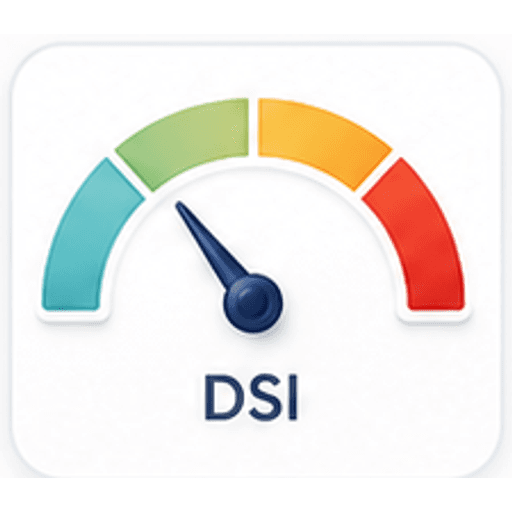
Dry Skin Index
0-10 DSI scale
Dermidia translates that physics into a simple scale for everyday skin care planning.
The DSI tiers
Dermidia groups DSI values into practical tiers. The wording is intentionally about environmental stress and everyday skin comfort, not medical diagnosis or treatment.
Low Risk
Indoor air is placing relatively low drying demand on healthy skin.
First Alert
A good time to pay closer attention to dryness-prone areas.
Special Care
Indoor drying stress is elevated enough to adjust daily moisturizing habits.
Enhanced Care
Consider more consistent moisturizing and room humidity awareness.
Weekly DSI Guide
Want this translated into weekly care guidance?
Use the Weekly DSI Guide for a Sunday email and companion dashboard built around your location and home type.
No credit card is needed for the first six Sunday guides.
Who Dermidia is for
Dermidia is designed for people who notice seasonal dryness or want a clearer signal for planning healthy skin care habits. Seniors are an important audience because skin often becomes more dryness-prone with age, but the DSI can be useful for many households.
- Adults whose skin feels drier during heating season
- Seniors and caregivers planning everyday skin comfort routines
- People living in dry climates, apartments, or highly heated homes